







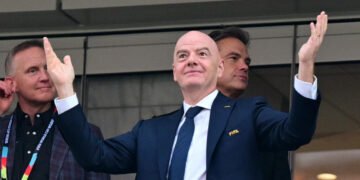







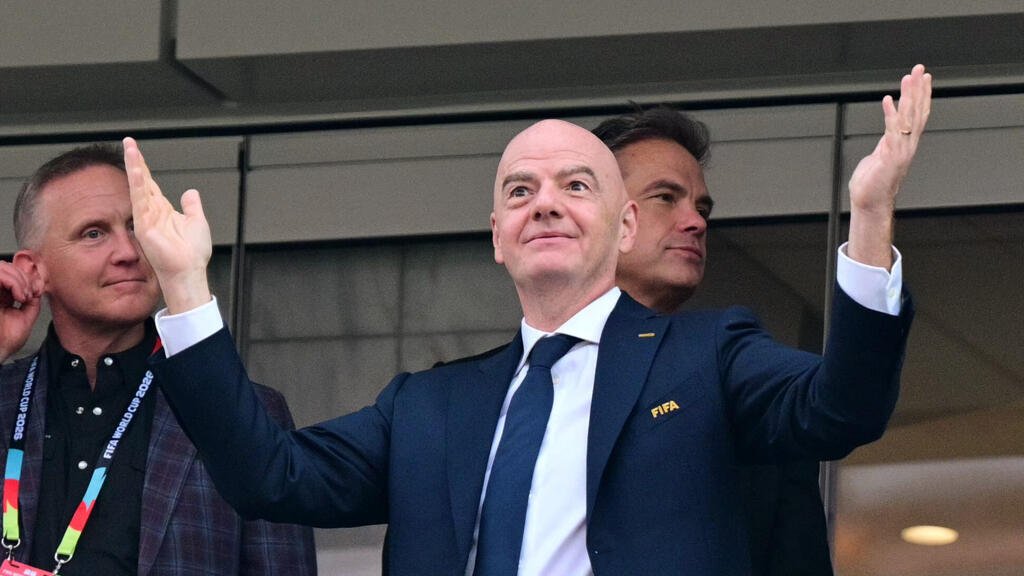
FIFA president Gianni Infantino faces intense pressure after 72 Members of the European Parliament demanded a formal investigation into his conduct. The dispute centers on FIFA’s handling of Folarin Balogun’s suspension during the World Cup.
The controversy began when United States striker F. Balogun avoided an automatic one-match ban. Reports revealed that U.S. President Donald Trump personally contacted Infantino about the decision. As a result, EU lawmakers now question whether FIFA broke its own political neutrality rules.
72 EU Members Demand Transparency From FIFA
The 72 EU members sent a joint letter to the heads of all 27 EU football associations. They urged them to push FIFA for a full investigation into the Balogun decision.
The letter states: “In light of the decision taken on Sunday to suspend the implementation of an automatic one-match suspension, we feel that it is time for European Football Associations, all of whom are member associations of FIFA, to intervene and ask that FIFA investigate the aforementioned decision-making processes. FIFA’s statutory rules and code of ethics provide a very clear basis for member associations to intervene and demand an investigation.”
Moreover, lawmakers want clarity on how the suspension was lifted during the World Cup. They believe the process lacked transparency. Therefore, they argue that European football bodies must act quickly.
Political Neutrality Rules at Center of FIFA Storm
EU lawmakers claim FIFA ignored clear rules on political neutrality. They cited specific articles in the FIFA Statutes and Code of Ethics.
Their letter explains: “The requirement of political neutrality is clearly outlined in both the FIFA Statutes and the Code of Ethics. Article 4(2) of the FIFA Statutes outlines the principle whereby ‘FIFA remains neutral in matters of politics and religion’, and Article 15 of the FIFA Code of Ethics states that all football officials must remain politically neutral, and provides for strong sanctions for violations.”
In addition, the lawmakers stressed the role of national associations. They wrote: “Member associations have an important role to play in ensuring that rules are upheld and that those who break them are held accountable.”

They also urged support for a wider probe. The letter adds: “In that regard, we urge you to add your voice to recent calls in support of an investigation into Gianni Infantino’s links to President Trump from MEPs and from the Norwegian Football Federation. Any investigation must now include scrutiny of the decision-making process surrounding FIFA’s decision to rescind the ban imposed on a member of the US men’s national team.”
Gianni Infantino Responds to FIFA Investigation Calls
Despite the growing criticism, Gianni Infantino insists FIFA followed proper procedures. He confirmed speaking with President Trump. However, he denied influencing the disciplinary process.
Infantino said: “FIFA’s judicial bodies are independent. They operate autonomously, apply the FIFA Disciplinary Code, and decide cases based on the applicable regulations and the specific facts before them.”
He added: “During our conversation (with President Trump), I explained that there was an ongoing legal process involving FIFA’s independent judicial bodies and that the case would be decided in due course by the competent bodies. That is how FIFA’s system works, and it is a principle that I will always uphold.”
What This Means for FIFA, USA and the World Cup
The case has raised serious questions about FIFA governance and political influence in global football. Furthermore, it has put the spotlight on the relationship between world leaders and sports officials.
If EU football associations back the lawmakers’ call, FIFA could face a formal internal investigation. For now, Gianni Infantino remains under fire, while pressure builds across Europe over the Folarin Balogun World Cup decision.