





























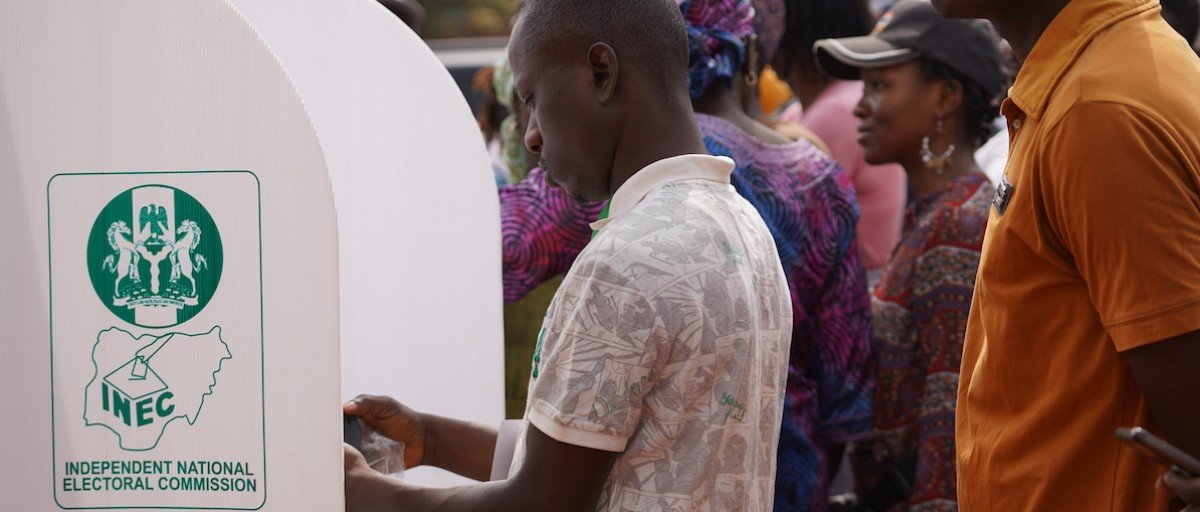
In the heated discourse of Nigerian politics, the clamour for the electronic transmission of election results “real-time online” has become a deafening chant. It is presented as the silver bullet—the simple truth that will kill election rigging and birth a new era of transparency. While the sentiment is patriotic, the logic is dangerously flawed. In our rush to modernize, we risk ignoring the “hard truth”: you cannot build a digital penthouse on a foundation of crumbling analog bricks.
Proponents of this law often point to the ubiquity of Point of Sale (POS) terminals in villages as proof that our network is ready. This analogy is not just simplistic; it is misleading. Anyone living in rural Nigeria knows the frustration of “network error” or “dispense error” on a POS machine. But while a failed transaction can be reversed, a failed vote transmission cannot be easily undone without casting doubt on the entire democratic process.
We must confront the infrastructure deficit. With broadband penetration hovering around 50%, half of the country is effectively in the dark. In rural areas, “Internet” is a luxury, not a utility. Zoom meetings are impossible; even WhatsApp struggles. This digital darkness is compounded by our power crisis. Telecommunication providers run their rural base stations on diesel generators. When logistics fail or diesel runs dry, the station shuts down. If we tie the legitimacy of an election solely to real-time transmission, what happens to the village whose base station is down?
The answer is terrifying: Disenfranchisement.
If a polling unit cannot transmit results due to a network outage, and the law mandates real-time transmission, the votes of those rural dwellers may be discarded. We would be creating a system where the urban elite choose the leaders because the rural poor are disconnected.
Furthermore, we are underestimating the capacity for sabotage. In a desperate political climate, if a politician knows they are losing a specific local government, they need not snatch ballot boxes anymore. They simply need to sabotage the local ISP base station or cut the fiber optic cables. If the data cannot flow, the election in that area is inconclusive.
Finally, we must look at cybersecurity. By placing our entire electoral integrity on the open internet in real-time, we invite hackers—both domestic and state-sponsored foreign actors—to a feast. A Distributed Denial-of-Service (DDoS) attack could crash the server on election day, plunging the nation into chaos.
Nigeria is attempting to run before it can crawl. We must not box ourselves into a corner where technology becomes the tool of exclusion rather than inclusion.

International Perspectives: How the West Transmits Results
It is a common misconception that “advanced” nations transmit results directly over the internet in real-time. In reality, the UK, USA, and France prioritize security and paper trails over instant digitization.
1. The United States of America
The US election system is highly decentralized, managed by counties and states, not a single federal body.
- The Method: Most Americans vote on paper ballots or machines that produce a paper audit trail.
- Transmission: Voting machines are rarely connected to the internet to prevent hacking. At the end of voting, the data is usually transferred to a memory stick, which is physically carried to a central tabulation center.
- Reporting: What we see on TV “real-time” is the media (AP, CNN) projecting results based on precinct data. The official certification happens weeks later after physical audits. They do not rely on a central “real-time” server for the legal result.
2. The United Kingdom
The UK is surprisingly traditional regarding elections.
- The Method: Voting is entirely manual using paper ballots and pencils.
- Transmission: There is no electronic transmission from the polling station. Ballot boxes are sealed and physically transported by van to a counting center (usually a sports hall or town hall).
- Reporting: The Returning Officer announces the result verbally on a stage. There is no central digital dashboard accumulating votes in real-time during the counting process for the public to view online.
3. France
France maintains a strict manual system to ensure trust.
- The Method: Paper ballots are cast into transparent urns.
- Transmission: Counting is done by hand in the presence of the public. Once counted, the results are written on a “procès-verbal” (official report).
- Reporting: These results are then transmitted via secure government intranet (not the public internet) or via phone to the Ministry of the Interior for aggregation. The primary validation remains the physical paper document.
Real-Time Online Transmission in Nigeria: Pros and Cons
The Advantages (The “Simple Truth”)
- Reduced Ballot Snatching: If results are uploaded immediately after counting at the polling unit, snatching the physical box afterward becomes futile.
- Transparency: The public can view copies of the result sheets (EC8A) online (like the IReV portal), making it harder for collation officers to alter figures at the Ward or State level.
- Speed: Reduces the tension associated with waiting days for results.
The Disadvantages (The “Hard Truth”)
- Massive Disenfranchisement: As noted, rural areas with no 3G/4G coverage will be excluded. Their votes essentially won’t count if transmission is the only legal standard.
- Cyber Vulnerability: A centralized server creates a “single point of failure.” If the server is hacked or jammed, the entire national election is compromised.
- The “Generator” Factor: Reliability is tied to diesel availability. A localized fuel scarcity could technically invalidate an election in that region.
- Lack of Trust in Technocrats: Instead of fearing thugs, stakeholders will fear the IT engineers managing the database. It shifts the power to rig from the streets to the server room.
- Legal Quagmires: If the law says results must be transmitted real-time, any technical glitch leads to litigation. Courts, not voters, will end up deciding elections based on technicalities.
Options for Best Practice on electronic transmission of election
Nigeria should not abandon technology, but it must adapt it to our environmental reality. We should adopt a Hybrid Verification Model.
- Store and Forward (Not Real-Time):
The law should allow for “Store and Forward” technology. If a polling unit has no network, the BVAS (Bimodal Voter Accreditation System) should securely store the result. The officials then move to the nearest area with coverage to upload. The timestamp will show the upload happened later, but the data remains encrypted and valid. - Paper Supremacy with Digital Check:
The physical Form EC8A (result sheet) signed by agents must remain the primary legal document. The digital upload should serve as a verification tool (a check) to ensure the paper result hasn’t been altered during transport. We must not replace the paper trail entirely. - Offline Redundancy:
Election technology must be designed to work 100% offline. Transmission should only be a post-election reporting mechanism, not a condition for the vote to be counted. - Phased Implementation:
Before passing a blanket law, the electoral commission (INEC) should map out “Black Spots” (areas with no coverage). In these areas, satellite transmission or purely manual collation must be legally protected so those villagers are not disenfranchised.
Conclusion
Transparency is the goal, but technology is just a tool. We cannot legislate a 5G reality in a 2G environment. Nigeria must build an election system that respects its infrastructure limitations, or we risk building a digital democracy that excludes half its citizens.