




























Nigeria’s gas production climbed to an average of 7.59 billion standard cubic feet (bscf) in July 2025, marking a significant rise in output while gas flaring fell to 7.16 per cent, according to the Nigerian Upstream Petroleum Regulatory Commission (NUPRC).
Gas Production Growth in Nigeria
In a statement released on Saturday via its official social media pages, the NUPRC described the figures as a “rare energy milestone” for the country. The agency said, “The simultaneous growth in output and decline in flaring underscores the commission’s drive to boost production while advancing its 2030 zero-flare commitment.”
The commission revealed that Nigeria’s gas industry has shown consistent growth over the past three years. The 7.59 bscf daily average recorded in July 2025 represents an 8.58 per cent increase compared to the 6.99 bscf posted in the full year of 2024, and a 9.84 per cent increase from 2023’s 6.91 bscf.

Decline in Gas Flaring
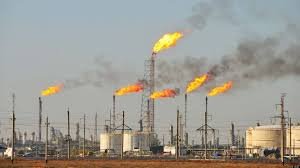
Despite higher production, gas flaring has continued to reduce. The flaring rate of 7.16 per cent in July 2025 is an improvement on 7.55 per cent in 2024 and 7.38 per cent in July 2023. NUPRC explained that this steady decline reflects its commitment to eliminating routine gas flaring by 2030.
To achieve this, the commission has rolled out several initiatives including the Nigerian Gas Flare Commercialisation Programme, the development of a Decarbonisation and Sustainability Blueprint, promotion of Carbon Capture and Storage, and the integration of sustainability measures through its Upstream Petroleum Decarbonisation Template.
Domestic Gas Delivery Performance
The report also highlighted progress in the Domestic Gas Delivery Obligation (DGDO). Performance rose to 72.5 per cent in July 2025, compared to 71.8 per cent in June.
Between January and July, DGDO performance fluctuated slightly—72.2 per cent in January, 73.5 per cent in February, 70.8 per cent in March, 73.7 per cent in April, and 73.0 per cent in May—before rising again in July.
Nigeria’s Gas Production Breakdown
By contract type, Marginal Sole Risk operations (formerly Marginal Fields) contributed 63 per cent of gas output in July. Production Sharing Contracts accounted for 24 per cent, while Joint Ventures supplied 10 per cent, and Sole Risk operators delivered 3 per cent.
NUPRC’s utilisation data shows that, year-to-date, 35.88 per cent of production was exported, 27.82 per cent supplied to the domestic market, and 29.13 per cent used for field and plant operations such as reinjection, fuel, and gas lifting.
Gas-to-Power Supply Reaches Three-Month High
Nigeria’s gas-to-power supply also improved, rising by 3.48 per cent month-on-month. Daily deliveries increased from 833.86 million standard cubic feet per day (mmscf/d) in June to 862.86 mmscf/d in July 2025, the highest in three months.
From January to July, gas-to-power deliveries ranged between 780.23 mmscf/d in January and 886.83 mmscf/d in March, before stabilising around 837–862 mmscf/d in the last three months.