
















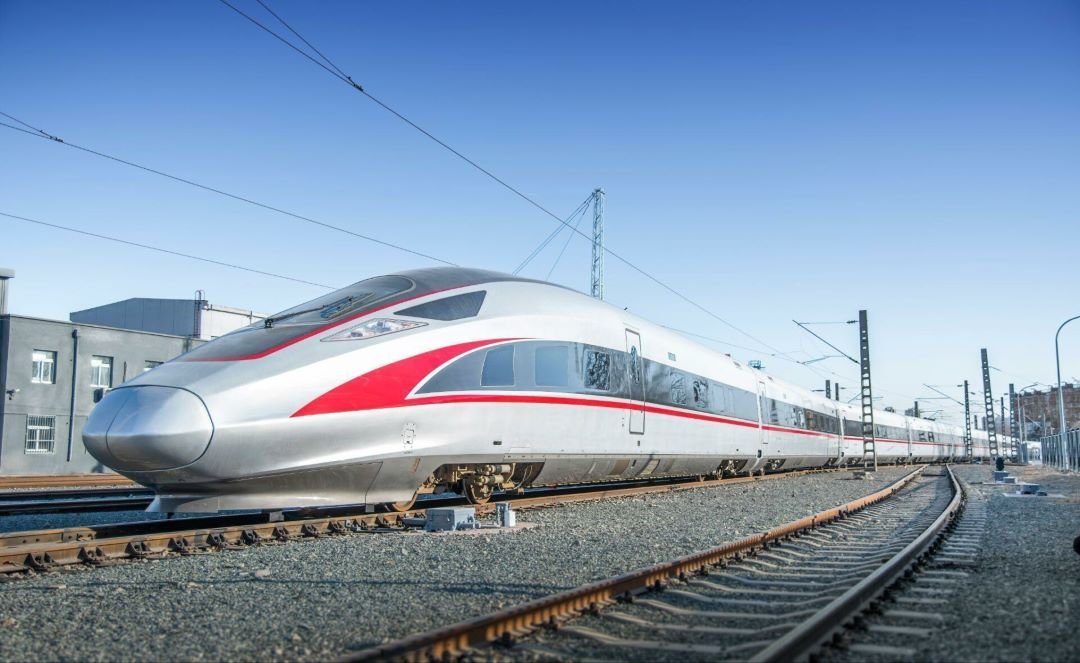
Abuja, Nigeria – August 13, 2025 – In a landmark development poised to reshape Nigeria’s economic and transportation landscape, the Federal Government (FG) alongside private partners De-Sadel Nigeria Ltd. and China Liancai Petroleum Investment Holdings Limited has secured the crucial proof of funds for a colossal $60 billion high-speed rail network. The ambitious 4,000-kilometer project, targeting six states, marks one of Africa’s largest infrastructure undertakings.
Funding Milestone Presented
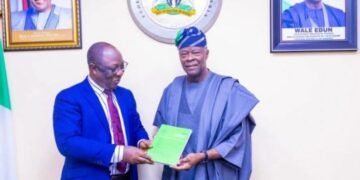
The commitment moved significantly forward this Tuesday in Abuja when representatives from De-Sadel and China Liancai formally presented documentation confirming the $60 billion financing to the Secretary to the Government of the Federation (SGF), Senator George Akume. The high-profile event saw attendance from the Minister of Transportation, Sa’idu Alkali, the Minister of State for Petroleum Resources (Gas), Ekperikpe Ekpo, and representatives from the Attorney-General’s office and the Infrastructure Concession Regulatory Commission (ICRC).
Phased Construction, Early Benefits
Samuel Uko, Chief Executive of De-Sadel Nigeria Limited, outlined the project’s scope and timeline. He confirmed that an official proof-of-funds from the Asian Development Investment Bank (ADIB) was submitted specifically for the crucial first phase. This initial stage will focus on connecting Nigeria’s major economic hubs: Lagos, Abuja, Kano, and Port Harcourt, covering approximately 1,600 kilometers.
“This administration has given us almost 90 per cent of the necessary approvals,” Uko stated. “We have now submitted the proof-of-funds through our financial and technical partners.” He emphasized a practical, phased approach: “Construction will be in phases. Once we complete the sections, Nigerians will begin to enjoy the train service before the entire 36-month schedule is completed.”

Powering Progress: The Critical Gas Link
Uko highlighted a key dependency for the high-speed system: massive power requirements. This, he explained, creates a vital link to Nigeria’s energy sector. “The rail system would require substantial power supply, which in turn would depend on the availability of gas, hence the linkage between the project and the oil and gas sector.” Minister Ekperikpe Ekpo directly addressed this need, assuring investors of abundant gas supply, leveraging Nigeria’s vast reserves. “Gas is a precursor for this project, and investors will not face shortages… Nigeria had proven reserves of 210 trillion cubic feet of gas, with an additional 600 trillion cubic feet in deep-sea deposits,” Ekpo affirmed.
Government Scrutiny & Commitment
While welcoming the development, SGF George Akume described the meeting as “stimulating” but confirmed standard verification procedures would follow. “We do not doubt them, but it is standard procedure for government to verify large financial commitments,” Akume stated. He linked the project to President Bola Tinubu’s broader economic vision: “President Bola Tinubu’s administration has made reforms to ease the cost of doing business, and if investors are ready, Nigeria is ready.”
Alignment with National Goals
Transportation Minister Sa’idu Alkali confirmed the project perfectly aligns with his ministry’s mandate for “safe, secure, and affordable transportation” and the President’s directive to attract foreign investment. Jobson Ewalefoh, Director-General of the ICRC, outlined the next steps following the proof-of-funds submission: “They have now presented $60 billion in proof-of-funds from China. The next step is for us to review and validate their claims to ensure the project’s viability. This is in line with the president’s vision that Nigeria is open for serious business.”
The Road Ahead
The presentation of the $60 billion proof-of-funds is a pivotal step, transitioning this mega-project from concept toward tangible construction. Subject to final verification and approvals, the phased development of this high-speed rail network promises not only faster connections between major cities but also significant economic stimulation, job creation, and a major leap forward in Nigeria’s infrastructure capabilities. All eyes are now on the verification process and the anticipated commencement of construction on what could be a transformative artery for the nation.
Source: Based on reporting from the News Agency of Nigeria (NAN)