





















Civil society organisations (CSOs), economic experts, and opposition figures have praised President Bola Ahmed Tinubu and the federal government for the Lagos-Calabar Coastal Highway project, calling it a landmark initiative that could transform Nigeria’s infrastructure and economy.
Umahi Gives Progress Report
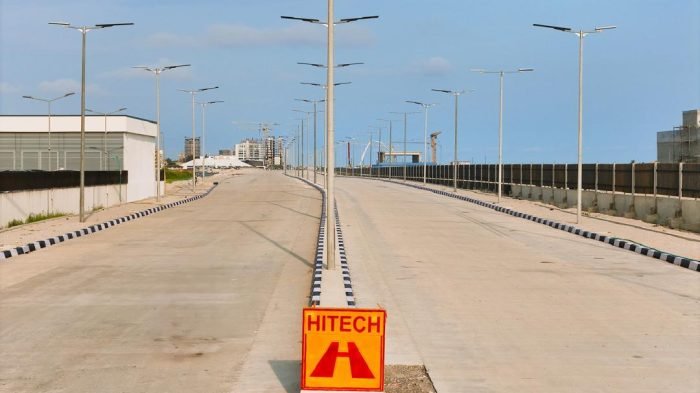
During an inspection tour in Lagos, Minister of Works, Senator David Umahi, disclosed that the first section of the 750-kilometre Lagos-Calabar Coastal Highway would be ready by May 2026.
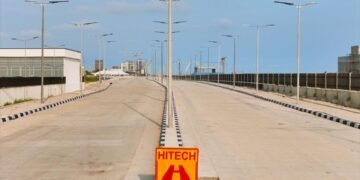
He explained that the completed stretch runs from Ahmadu Bello Way, Victoria Island, to Eleko, with 35 kilometres already done and 12 kilometres outstanding. Umahi also confirmed that the second phase, linking Eleko to Ode-Omi in Ogun State, has begun.
“Roads and bridges are the infrastructure that build the GDP of every nation,” Umahi said. “President Bola Ahmed Tinubu understands this and has shown the commitment to deliver.”
Opposition Leaders Call for National Consensus
Joining the tour, Otunba Segun Showunmi, a Peoples Democratic Party (PDP) chieftain, urged Nigerians to support such legacy projects regardless of party lines.
“You cannot develop a nation without a long-term plan,” Showunmi noted. “Beyond political differences, we must build consensus for national development. At 65, Nigeria must be in a hurry to model its infrastructure after globally competitive economies like Singapore, India, and the UAE.”
Experts See Highway as Economic Catalyst
Chairman of Proshare Group, Mr. Olufemi Awoyemi, described the Lagos-Calabar Coastal Highway as a major test case for large-scale infrastructure financing.
“This is not just a road,” he explained. “It is a test case for how Nigeria will finance and manage transformative infrastructure.”
Civil society leader Declan Ihekaire also praised the project, urging NGOs to recognize progress as well as shortcomings. “We must not condemn all the time,” he said. “When we see progress, we should commend it. Ultimately, the people benefit from such initiatives.”
Beyond the Lagos-Calabar Coastal Highway
Umahi revealed that property disputes along the project route had been resolved, while agencies like the EFCC and DSS would probe alleged irregularities in diaspora investments and the WinHomes estate.

He also highlighted three other ongoing legacy projects: the 477-kilometre Trans-Saharan Highway, the 422-kilometre Akwanga–Jos–Bauchi–Gombe Expressway, and the 1,068-kilometre Sokoto–Badagry Superhighway.
Umahi assured Nigerians that his ministry would maintain transparency by holding regular press briefings and media engagements.
Conclusion
The Lagos-Calabar Coastal Highway continues to attract commendation from experts, CSOs, and political leaders who agree it is a transformative project. As construction advances, stakeholders believe the initiative could redefine Nigeria’s infrastructure growth and strengthen its economic future.